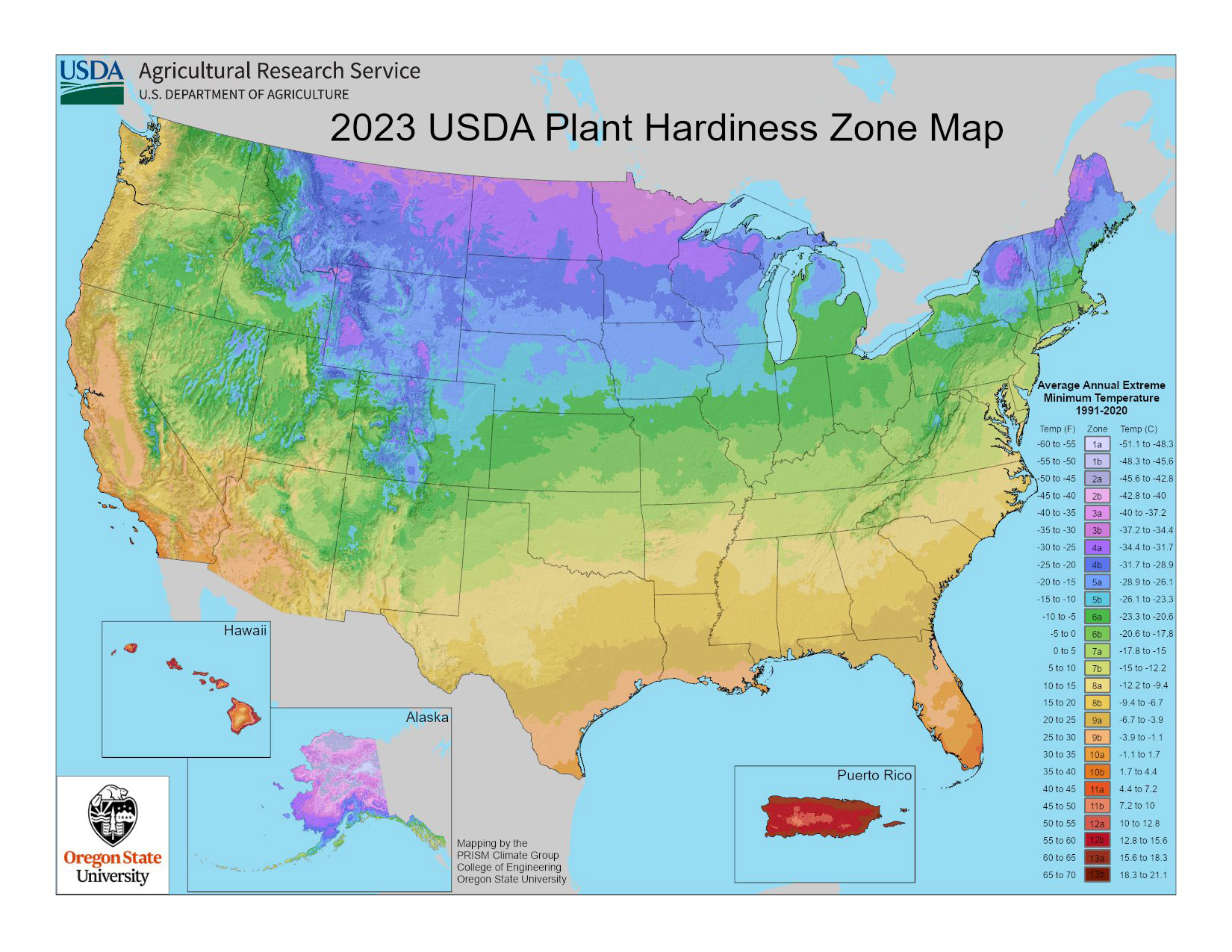
The USDA Plant Hardiness Zone Map shows the Twin Cities moved from Zone 4b to Zone 5a. This is similar to places like Mankato and most of southern Minnesota. There are several reasons for the change:
- Winters are warming at night
- There are more heavy rains
- The area is generally wetter and warmer
- The new Zone requires a more diverse palette of trees
Things to consider with the new Zone designation:
- Purchase trees typically found in high zones to best serve a similar climate. The Penn State College of Agricultural Sciences explains that this is a climate-smart forestry strategy known as assisted migration or climate-adjusted seed sourcing. It involves sourcing trees, seeds, or saplings from slightly higher elevations (or higher latitudes) and planting them in lower-elevation areas that have a similar climate, in anticipation of that lower area becoming warmer and drier over time.
- Don’t plant White birches on south-facing slopes, as they are susceptible to the bronze birch borer
- Trees require shade in their root zone, so plant with other trees
Daniel Gjertson is the Arboriculture Program Coordinator and Educator for the University of Minnesota Urban Forestry Outreach & Research (UFOR) Lab. He recently gave a talk at the 2026 Northern Green Expo, covering the topic about species to consider for Zones 4 and 5 if you’re planting trees. He said species to consider for Zones 4 and 5 include:
- Baldcypress
- Black tupelo – slow growing, drought-resistant
- Cucumbertree magnolia – more sensitive
- Hardy pecan
- Hoptree – large shrub
- Pawpaw – need multiple for cross pollination, cool fruit
- Pitch pine – drought tolerant, acidic soil
- Shagbark hickory – zone 4
- Shingle oak – urban tolerant
- Tuliptree – weak wooded, so don’t put close to a house
- Yellowwood – legume
Zone 4 and 5 shrubs to consider:
- Kalm St. Johnswort – pollinator plant
- American bladdernut
- Silverbell species
- Sweetshrub – smells good
- White fringe tree – dioecious (needs male nearby) and fragrant
- Lead plant – prairie plant, drought-tolerant, pollinators, trouble with rabbits
- New Jersey Tea – prairie plant, drought-tolerant, pollinators, trouble with rabbits
- Sweet fern- prairie plant, drought-tolerant, pollinators, trouble with rabbits\
Minnesota’s climate is changing which means you need to make sure you’re choosing your plantings wisely. If you’re looking to add trees and shrubs to your yard this spring, contact the experts at Organic Lawns by LUNSETH to help guide you so you have a successful landscape this summer – and for years to come.


