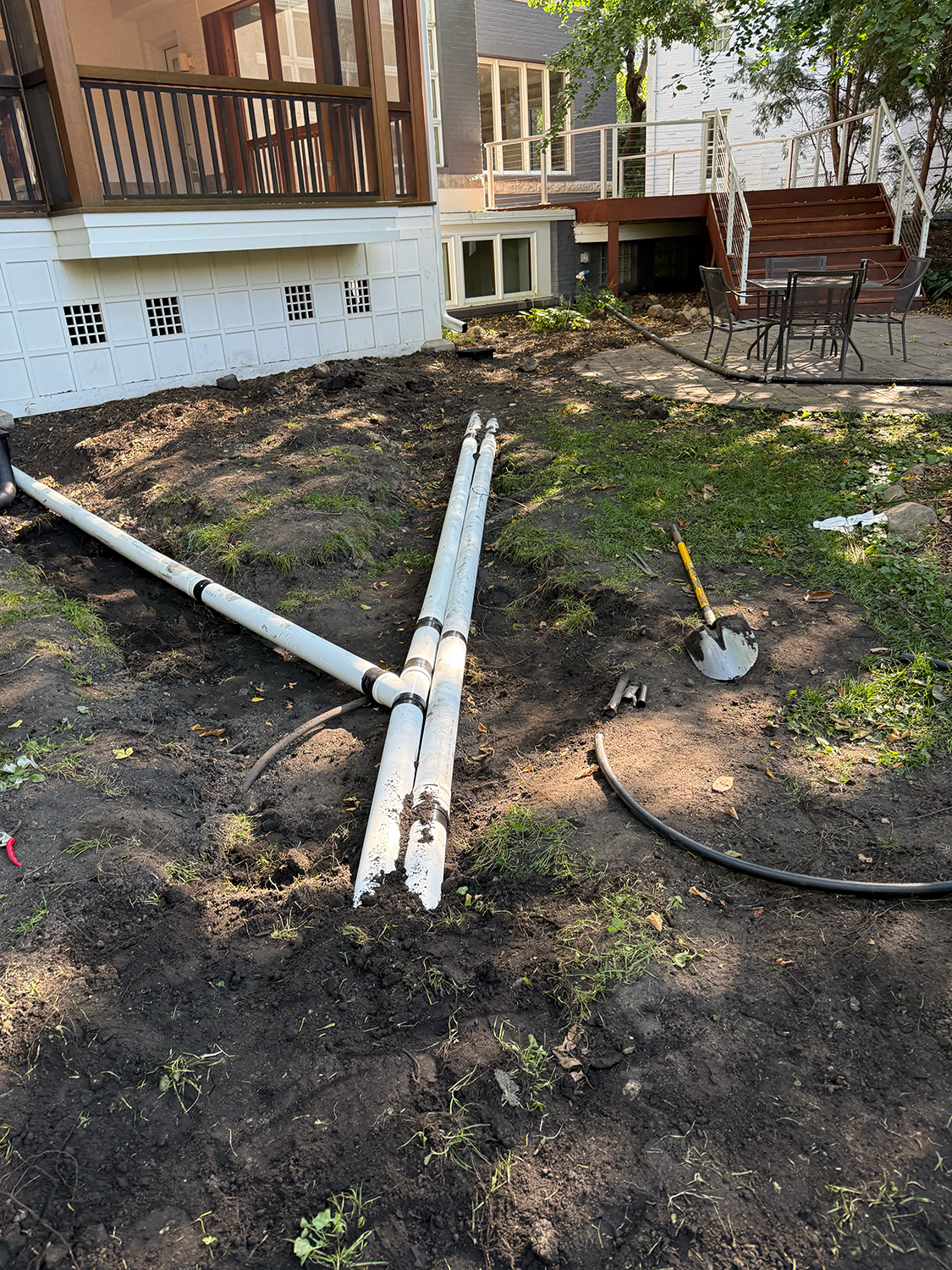
Drainage problems can start small, but if left unaddressed, they can lead to bigger headaches down the road. Whether it’s standing water in the yard, runoff collecting near the foundation, or water that has nowhere to go around patios and landscape beds, it’s important to identify these issues before they become larger problems.
When evaluating a property, there are a few common areas worth paying attention to. Every property is different, and the right drainage solution will depend on several factors, including the amount of water coming through the area, soil conditions, existing grades, and the property’s overall layout.
Here are five common drainage concerns we look for when walking a property and some ways to address them.
1.Standing Water in the Lawn
Water that continues to sit in the lawn for 24 hours or longer after a rainfall may be a sign that drainage isn’t functioning as it should. Poor grading, compacted soils, and inadequate drainage can all contribute to the problem.
WHAT TO LOOK FOR: Low areas, soggy turf, recurring puddles, and areas that remain wet long after the rest of the yard has dried.
2. Water Collecting Along the Foundation
Water that collects next to the home’s foundation is something worth addressing sooner rather than later. Over time, excessive moisture can contribute to basement water intrusion, foundation concerns, and other moisture-related issues.
WHAT TO LOOK FOR: Improper grading, low spots along the home, clogged or poorly directed drainage systems, and downspouts discharging too close to the foundation.
3. Excessive Runoff from Downspouts
Roof runoff can move a surprising amount of water in a short period of time. When downspouts discharge too close to the home or into an area that cannot handle the volume, water can collect around the foundation, wash out landscape beds, or create erosion.
WHAT TO LOOK FOR: Erosion beneath downspouts, washed-out mulch or soil, standing water, and areas where runoff is concentrated.
4. Water on Driveways and Patios
Hard surfaces like driveways, patios, and walkways don’t absorb water, so proper grading and drainage are important. Without a place for water to go, it can collect on the surface, create slippery conditions, contribute to algae and mildew growth, and cause erosion along surrounding landscape areas.
WHAT TO LOOK FOR: Low spots, water that sits after rainfall, improper slopes, and areas where runoff flows toward the home or adjacent landscape beds.
5. Waterlogged Landscape Beds
Too much water in landscape beds can be just as problematic as too little. Saturated soils limit the amount of oxygen available to plant roots, which can lead to declining plant health, root damage, and unfavorable growing conditions. Excess moisture can also create odors and attract unwanted insects.
WHAT TO LOOK FOR: Consistently saturated soil, declining or yellowing plants, standing water, and landscape beds that take an extended amount of time to dry out.
A GOOD RULE OF THUMB: Every property handles water differently. The goal isn’t simply to move water from one area to another, but to understand where it’s coming from, how much water we’re dealing with, and where it can be properly directed. A good drainage solution starts with understanding the property as a whole. Whether you need help with fall lawn cleanup, leaf mulching, or preparing your property for winter, our team can help you make the most of the season.
Ready to DEAL WITH YOUR DRAINAGE PROBLEMS? Contact LUNSETH today to learn more about our landscaping services.


