Minnesota homeowners know that a beautiful lawn can be challenging even in ideal conditions. Add dense tree cover, north-facing yards, long winters, and limited sunlight, and growing healthy turf becomes even more difficult. Shady lawns often struggle with thin grass, moss growth, soil compaction, and increased disease pressure.
The good news is that a thriving lawn in low-light conditions is possible — especially when you focus on building healthy soil and using organic lawn care practices that work with Minnesota’s climate instead of against it.
Dominic Petrella is an Assistant Professor of Managed Turfgrass Systems in the Department of Horticultural Science at the University of Minnesota (@umnhorticulture). He says that plants with less sunlight to support photosynthesis starve themselves over time, so grass can look good one year, but look worse year after year in low-light conditions.
Why Shade Creates Problems for Turf
Grass needs sunlight to photosynthesize and produce energy. Most turf varieties perform best with at least 6 hours of direct sunlight per day. In shaded areas, lawns receive less energy, which leads to:
- Thin or patchy turf
- Weak root systems
- Increased moisture retention
- Higher risk of fungal diseases
- Slower recovery from foot traffic
- More weed and moss invasion
Petrella adds that Morning dew in shady conditions increases turf stress.
In Minnesota, these problems are amplified because cool-season grasses already have a relatively short growing season. Long winters and spring snowmelt can leave shaded lawns stressed before summer even begins.
The Best Grass Types for Shade in Minnesota
Not all turf grasses respond to shade the same way. Choosing the right seed blend is one of the most important steps for success.
Fescues
Fine fescues are among the most shade-tolerant cool-season grasses available. They require less fertilizer, use less water, and fit naturally into organic lawn care programs.
Benefits include:
- Excellent shade tolerance
- Lower nutrient requirements
- Improved drought resistance
- Softer texture
- Reduced mowing frequency
Petrella points out that hard fescue looks better in shade than tall fescue.
Turf-Type Tall Fescue
Tall fescue can also perform well in partial shade, especially in lawns with moderate foot traffic. Its deeper roots help it tolerate stress more effectively.
Kentucky Bluegrass (Limited Use)
Kentucky bluegrass is popular in Minnesota but generally struggles in dense shade. In low-light conditions, it should only be used as part of a balanced seed blend rather than as a standalone turf type.
Poa Trivialis
Poa trivialis is a rough stalk bluegrass that is an invasive perennial grass weed. Petrella says that it thrives in moist soils and in lawns and parks with heavy to moderate shade from trees and buildings.
Penn State Extension explains that Poa trivialis has a perennial life cycle. It produces runners or stolons, which allow it to spread horizontally and creep over desirable grasses forming roughly circular patches. During periods of cool, moist conditions in spring, the vertical growth rate of P. trivialis can be 2-3 times faster than Kentucky bluegrass.
They go on to caution that In non-irrigated turf, during periods of high-temperature stress and/or drought in summer, P. trivialis begins to decline and foliage turns brown, leaving poor quality turf and openings for other weeds to develop. And its yellow-green color, coarse-textured leaf blades, and patchy appearance are often objectionable to homeowners and professional turf managers in stands of cool-season turfgrass.
Organic Lawn Care Strategies for Shady Lawns
Shaded turf requires a different management approach than full-sun lawns. Organic practices can improve soil biology and help grass become more resilient naturally.
1. Improve Soil Health First
Healthy soil is the foundation of healthy turf. In shady environments, compacted or poorly drained soil can quickly weaken grass.
Organic lawn care focuses on:
- Increasing microbial activity
- Building organic matter
- Improving soil structure
- Enhancing root development naturally
Core aeration combined with compost applications can dramatically improve oxygen flow and water infiltration in shaded lawns.
2. Reduce Fertilizer Stress
Overfertilizing shaded grass often creates weak growth that is more susceptible to disease. After the turf is established, be careful not to apply too much nitrogen. Petrella recommends reducing nitrogen in shaded areas to 2lbs/N/year.
Organic fertilizers release nutrients slowly, allowing turf to grow steadily without excessive top growth. This helps grass conserve energy in lower-light conditions.
A balanced organic program also supports:
- Stronger roots
- Better stress tolerance
- Improved disease resistance
- More consistent color
3. Mow Higher
One of the simplest ways to improve shaded turf is to raise the mowing height.
Taller grass blades:
- Capture more sunlight
- Promote deeper roots
- Shade out weeds
- Reduce moisture evaporation
For most Minnesota lawns in shade, maintaining grass at 3 to 4 inches is ideal.
4. Water Carefully
Shaded areas dry out more slowly than sunny parts of the lawn. Overwatering creates ideal conditions for fungal diseases and moss growth.
Instead of frequent shallow watering:
- Water deeply and infrequently
- Allow soil to partially dry between watering cycles
- Water early in the morning to reduce overnight moisture
Organic soils with higher biological activity also retain moisture more effectively, reducing irrigation needs over time.
5. Prune Trees Strategically
Even a small increase in sunlight and airflow can make a major difference.
Selective pruning can:
- Improve light penetration
- Increase air circulation
- Reduce disease pressure
- Encourage stronger turf growth
In many cases, thinning lower tree branches is enough to significantly improve lawn performance without sacrificing shade or landscape beauty.
6. Use Shade Maps
Petrella encourages the use of free shadow maps to map out how light changes throughout the day and time of year. While this app is intended to gauge whether a site is appropriate for a solar installation, it has great information about the amount of sunlight at a specific location, helping better identify if there are low light challenges for growing grass
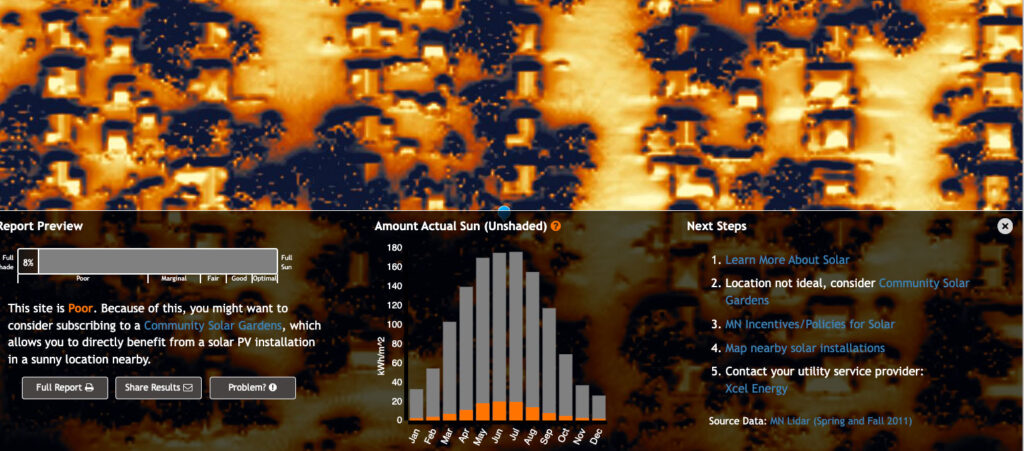
The picture above shows the results for an address in the SW Metro. The bar graph on the bottom shows that this property has challenges receiving enough sunlight for its turf.
Common Lawn Diseases in Shady Minnesota Turf
Low-light lawns are more vulnerable to fungal issues because moisture lingers longer on grass blades.
Common diseases include:
- Snow mold
- Red thread
- Leaf spot
- Powdery mildew
Organic lawn care helps reduce disease pressure by improving soil balance rather than relying heavily on synthetic fungicides. Proper mowing, watering, aeration, and nutrient management all contribute to a healthier ecosystem that naturally resists disease.
When Grass May Not Be the Best Option
Sometimes dense shade makes traditional turf unrealistic. If an area receives fewer than 3 hours of direct sunlight daily, alternative landscaping solutions may provide better long-term results.
Options include:
- Native groundcovers
- Woodland gardens
- Mulched pathways
- Pollinator-friendly shade plantings
An organic lawn care approach evaluates the entire landscape ecosystem — not just the grass.
A Smarter Approach to Shade Lawns
Shady lawns in Minnesota require patience and a customized strategy. Instead of forcing rapid growth with synthetic fertilizers, organic lawn care focuses on strengthening the soil, selecting appropriate grass varieties, and creating conditions where turf can thrive naturally.
With the right approach, even difficult low-light areas can become healthier, greener, and more resilient year after year.
Top of Form
Bottom of Form
If your lawn struggles under trees or in shaded areas, contact the experts at Organic Lawns by LUNSETH for an organic treatment program, or landscaping design – tailored to Minnesota conditions that can help restore balance naturally – without unnecessary chemicals or harsh inputs.


